
 English
 عربى
عربى Español
 русский
 中文简体
中文简体





Have you ever experienced this: you cut your knuckle, apply a band-aid, and it curls up after a few movements? You scrape your knee, apply a square dressing, but the edges just won't flatten. It's not that you don't know how to apply it; it's that these dressings are standard sizes, but everyone's wound shape, size, and location are different, making it difficult for a universal dressing to fit perfectly. 3D printing technology is changing this.
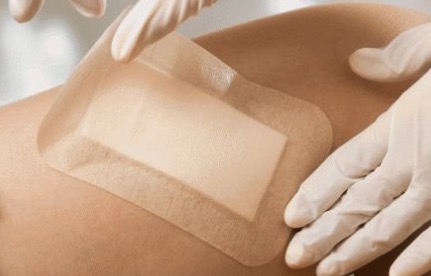
What exactly is 3D printed dressing?
3D bioprinting is an additive manufacturing technology that uses bio-ink containing biological materials, cells, or other active substances to build up a desired shape layer by layer according to a computer-designed model. Simply put, it's like building a house, printing out dressings layer by layer. This technology allows for precise control over the shape, thickness, and pore size of the dressing, and even allows printing different materials in different locations.
During printing, the wound is first scanned to obtain its outline data. The software automatically generates a matching model, and then the printer sprays bio-ink layer by layer onto the receiving platform. After dozens of layers are stacked, a dressing that perfectly fits the shape of the wound is produced. The whole process takes one to two hours.
What makes it superior to ordinary dressings?
The biggest problem with ordinary dressings is their poor fit. When the skin around a joint moves, it stretches and contracts. Ordinary dressings lack elasticity, so when the joint bends, the dressing stretches open, the edges lift, and it falls off after a few movements. 3D-printed dressings can solve this problem.
A research team has developed a 3D-printed dressing inspired by paper cutting. By adjusting the cutting parameters, the dressing's stretchability can be adjusted from 26% to 244%. This means that the required elasticity can be pre-set during printing based on the location of the wound. Dressings applied to finger joints can be designed to stretch along with the skin; when the finger bends, the dressing won't resist but will deform naturally, preventing it from curling or falling off.
In addition to being flexible and adjustable, 3D printing can also customize the absorbency and breathability of dressings, and even print different materials in different areas. For example, a single dressing can meet the needs of both high absorbency in the center of a wound and gentle fixation at the edges.
Can smart features be added too?
3D printing technology can not only customize shapes, but also incorporate functions. Research shows that 3D bioprinted dressings can function in four dimensions: rapid hemostasis, infection control, controlled drug release, and healing monitoring.
In terms of hemostasis, a research team printed a composite dressing that reduced hemostasis time by 50% and bleeding by 75% in a rat liver laceration experiment. Regarding anti-infection, antibacterial components can be added to the printed material, giving the dressing itself bactericidal capabilities. Another more advanced approach involves printing microalgae and probiotics into a hydrogel. The microalgae produce oxygen through photosynthesis, while the probiotics secrete antibacterial substances; their synergistic effect resulted in the restoration of approximately 90% of the skin structure in a diabetic rat model within 12 days.
Someone in China has already done it.
This technology is not just a concept confined to the laboratory. Shandong Nami Company launched bio-based cellulose wound dressings in 2017, and later, in collaboration with Qilu University of Technology, developed the first domestic device that can be used to print bio-based cellulose wound dressings. The product was launched to the market at the end of 2023, and sales exceeded 10 million yuan in the first quarter of 2024.
Suzhou Huihan Technology is moving even faster, collaborating with Academician Fu Xiaobing's team to commercialize bio-3D printing technology. In October 2025, they invested 1 billion yuan to build a factory in Huai'an, specializing in the production of bio-3D printing inks and artificial skin, with an annual output of 1,500 tons upon completion. This demonstrates that the technology is no longer just in the research and development stage, but is moving towards large-scale production.
What will the future hold?
Perhaps in a few years, wound care will look like this: You accidentally cut your finger, take a picture of the wound with your phone, select the injured area, and the system automatically generates a dressing model that fits the shape of your wound. Click print, and a personalized dressing will be ready in about ten minutes. Once applied, it won't curl up or fall off, and it can even release different medications depending on the healing process.
From mass production to personalized care, wound care is becoming more precise. This future is actually not far off. For more information on Innomed® Silver Ion Dressing Foam, please refer to the previous articles. If you have customized needs, you are welcome to contact us; you wholeheartedly. At long-term medical, we transform this data by innovating and developing products that make life easier for those who need loving care.
Editor: kiki Jia


