
 English
 عربى
عربى Español
 русский
 中文简体
中文简体






Regarding scarring, you need to understand that many people focus all their energy on making wounds heal as quickly as possible. Only after the wound has completely healed do they discover raised scars and frantically search for scar removal products. This approach often misses the optimal intervention period. From the physiological process of wound healing, scar hyperplasia doesn't begin after healing; it starts developing as soon as the wound enters the proliferative phase. Therefore, the timing for scar treatment shouldn't wait until the scar has formed, but rather begin management during the healing process. Understanding the essence of the time window is crucial for effective intervention during those critical weeks.
What stages of change will a scar undergo after a wound heals?
After skin injury, the repair process can be roughly divided into three phases: inflammation, proliferative phase, and remodeling phase. The inflammation phase usually lasts three to seven days, during which the wound stops bleeding and necrotic tissue is removed. The proliferative phase is the critical stage for scar formation, generally starting about a week after injury and lasting for several weeks or even months. During this time, fibroblasts synthesize large amounts of collagen to fill the defect. If the balance between collagen synthesis and degradation is disrupted, with synthesis consistently outpacing degradation, excessive collagen accumulation occurs, leading to a gradually thickened and raised scar. The subsequent remodeling phase can last for more than a year, during which collagen fibers rearrange, the scar color gradually fades, and the texture softens. From this timeline, the core window for scar treatment is the early stage of the proliferative phase, which is within two weeks to three months after wound healing. During this period, collagen metabolism is most active, and external interventions are more likely to influence its final outcome.
Do I have to wait until the scabs have completely fallen off before I can start using anti-scar products?
This is a very common misconception. Many people worry that using anti-scar products before the wound has fully healed will irritate the wound and cause infection, so they wait until the scab falls off naturally or the wound surface is completely dry before taking action. In fact, this often means that the first wave of anti-scar treatment has already passed. The correct starting point is when the wound has achieved epithelialization, that is, when the wound surface is completely covered by a layer of pink or light red new epidermis, and there is no longer any exudation or breakage. At this time, anti-scar intervention can begin immediately. For acute small wounds, this time point may be five to ten days after the injury; for surgical incisions, intervention can be initiated after the sutures are removed and the needle holes are closed and there is no exudation, usually about ten days to two weeks after the operation. At this time, the scar tissue is still in the early stage of active proliferation. Although the skin surface may look smooth, the dermis is already accelerating collagen synthesis. Early intervention can regulate collagen arrangement in advance, rather than waiting until the scar has become raised and hard before trying to soften it, the latter of which will greatly reduce the effectiveness.
Is it still useful to start treating scars that have already become raised and hardene?
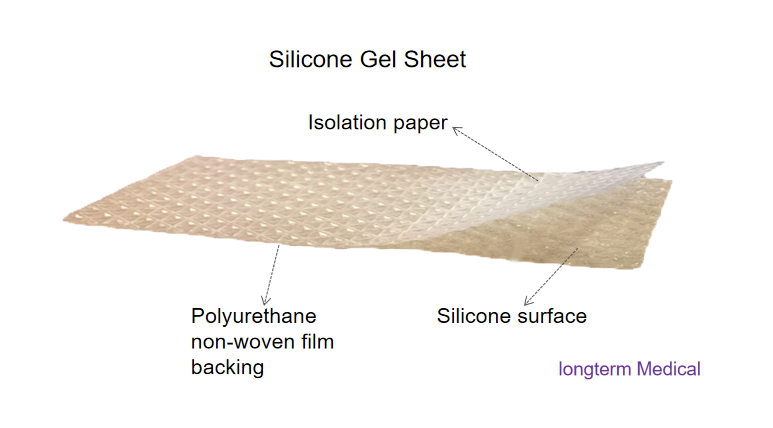
It's helpful, but expectations and strategies need adjustment. The duration of the proliferative phase varies from person to person; some people's scars become noticeably raised within one or two months after injury, while others only gradually become prominent after three or four months. If the initial window of opportunity is missed and a red, raised scar has already formed, active intervention is still possible, but the intensity and duration of treatment need to be strengthened. For hypertrophic scars within six months, continuous use of silicone scar patches or gels, combined with pressure therapy, can still reveal changes in color from dark red to pinkish-white, texture from hard to soft, and thickness gradually decreasing. However, the effect will be slower than with early intervention, and it usually takes three to six months of consistent use to see significant improvement. After a scar has been in the mature and stable phase for more than a year, the effectiveness of topical products alone will decrease significantly. At this point, it is more necessary to use medical methods such as laser, injection, or radiation therapy in combination. Therefore, the time window is not absolutely closed, but rather a door that narrows over time; the earlier it is opened, the less effort is required.
Is there a difference in the timing of scar treatment for wounds in different locations?
The thickness, tension, and blood supply of skin vary greatly across different areas, resulting in different scar hyperplasia patterns and requiring adjustments to the timing of anti-scar intervention. Areas with high tension, such as the presternal region, back, earlobes, and extensor surfaces of joints, exhibit a stronger and faster tendency for scar hyperplasia, often showing slight bulges as early as one week after wound healing. Anti-scar intervention should begin earlier in these areas, using silicone preparations as soon as the epidermis has healed and minimizing local traction. The face, with its rich blood supply and relatively low tension, carries a lower risk of scar hyperplasia, but due to high aesthetic requirements, early intervention is also recommended to achieve optimal smoothness; intervention can typically begin five to seven days after suture removal and wound closure. In looser areas like the mid-limbs and abdomen, the scar hyperplasia timeline is slower, but starting anti-scar products within two weeks of healing is still ideal. Special populations, such as children and adolescents, have more active skin metabolism, leading to a prolonged and more reactive scar hyperplasia period. The anti-scar intervention cycle often needs to be maintained for six months or even longer after injury, and the scar morphology may continuously change throughout the growth period, requiring ongoing follow-up observation.
Missing the best opportunity doesn't mean there's no way out.
If you've missed the early intervention window by the time you read this article, don't be overly anxious. Starting to treat scars at any time is better than ignoring them completely. For older scars, while the penetration and regulatory effects of topical products are limited, silicone preparations can still improve hydration, reduce itching and tightness, and, when combined with elastic bandages or silicone patches for continuous pressure therapy, can still flatten some thicker scars. More importantly, understanding that the scar remodeling period can last a year or even longer makes it clear that scar management is a long-term adjustment rather than a short-term sprint; intervention is meaningful as long as the scar is still within the remodeling period. Incorporating scar assessment into the routine after each dressing change, and starting action the moment the wound heals, is the core time principle for scar control.
For more information on Innomed® Silicone Scar Dressing, refer to the Previous Articles. If you have customized needs, you are welcome to contact us; You Wholeheartedly. At long-term medical, we transform this data by innovating and developing products that make life easier for those who need loving care.
Editor: kiki Jia


