
 English
 عربى
عربى Español
 русский
 中文简体
中文简体





Suture removal is a crucial step in surgical recovery. Many people mistakenly believe that once the sutures are removed, the wound is fully healed and the dressing can be completely removed. However, suture removal only confirms that the tissues on both sides of the incision have healed to a point where they can maintain apposition on their own; it does not mean that the skin and subcutaneous repair process is complete. Although a complete epithelial layer has formed over the incision after suture removal, the thickness and tensile strength of this new epidermis are far lower than normal skin, and the barrier function of the stratum corneum has not yet been fully rebuilt. If the incision is directly exposed to friction from clothing, sweat, and sunlight at this stage, it can lead to pigmentation and lifting of the edges due to repeated irritation of the new skin, or even widening and hypertrophic scarring due to lack of continuous support.
When exactly is the golden period for scar prevention?
The golden period for scar prevention refers to the first few months after wound healing when scar tissue enters an active remodeling phase, especially the period from suture removal to three months post-surgery. During this time, fibroblast activity is high, the balance between collagen synthesis and degradation is not yet stable, and scar tissue is most responsive to external interventions. If the incision is continuously supported mechanically, moisturized, and covered with external pressure during this stage, collagen fibers can be guided to arrange themselves in an orderly manner rather than accumulating haphazardly, thus reducing the probability of scar widening and hyperplasia. Once this window of opportunity is missed and the scar has stabilized and hardened, the effectiveness of topical products will be greatly reduced, necessitating more complex and costly medical procedures such as laser treatments or injections. Therefore, the key to scar prevention is not waiting for scars to appear before treatment, but rather initiating preventative interventions from the moment sutures are removed.
What kind of dressing should be chosen after suture removal?
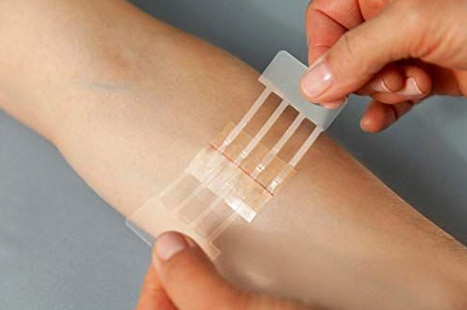
Regular adhesive bandages are designed for small, superficial injuries. The absorbent pad is concentrated in a small central area, and the width and elasticity of the adhesive tape are limited. This provides insufficient support for postoperative incisions, especially linear incisions near joints or areas of tension. After suture removal, a combination of silicone scar dressings or silicone gel and a wide-edged polyurethane film should be prioritized. Silicone scar dressings serve two purposes: first, they continuously release low-molecular-weight silicone to form a breathable protective film on the stratum corneum, reducing transepidermal moisture loss and keeping new scars moist rather than dry and crusted; second, their thickness and ability to distribute mechanical tension limit lateral traction on the skin around the incision, reducing the risk of the scar widening under tension. If the incision is located in an uneven area such as a joint, behind the ear, or in front of the sternum, applying silicone gel followed by a layer of highly elastic transparent polyurethane film dressing will result in a better fit. Whether it's a patch or a gel, it needs to be worn for at least 12 to 24 hours a day, and continuous use for at least three months is required to see a clear effect on improving the width and color of scars.
What should you pay attention to during this crucial period after suture removal?
Sun protection is another seriously underestimated aspect of scar management. Under UV stimulation, melanocytes in the newly formed epidermis produce overactive pigment synthesis, leading to darker scars that are difficult to reverse. For six months after suture removal, the incision site should be protected from direct sunlight. Even when outdoors, if the incision is covered with a dressing, if the dressing is not UV-protective, you should still wear clothing or use a non-irritating physical sunscreen. Regarding diet, after suture removal, the incision no longer requires the same strict dietary restrictions as an open wound. However, continued intake of sufficient high-quality protein and vitamin C has a positive effect on collagen synthesis. There is no need to supplement with large amounts of high-dose single-nutrient supplements; a balanced diet is sufficient. Regarding activity, for incisions near joints, the time spent on immobilization and functional exercises should be balanced under the guidance of a doctor. Excessive immobilization may lead to joint stiffness, while excessive activity increases the risk of widening scars. The specific range and intensity of activities should be based on the surgeon's rehabilitation plan. Suture removal is not the end of wound care, but rather the transition from the healing stage to scar management. By seizing the golden three-month window after surgery, and with the continued intervention of dressings and silicone products, most surgical incisions can ultimately remain as a single line rather than a large scar. For more information on Innomed® Silicone Scar Dressing, refer to the previous articles. If you have customized needs, you are welcome to contact us; you wholeheartedly. At long-term medical, we transform this data by Innomed and develop products that make life easier for those who need loving care.
Editor: kiki Jia


