
 English
 عربى
عربى Español
 русский
 中文简体
中文简体






Many people are taught from childhood that wounds should be left open to air out and allow a scab to form for faster healing. Elders often say that wounds need air exposure, and that prolonged use of bandages will cause damage. While this concept seems to work for minor superficial abrasions, for wounds requiring careful treatment, this airy and dry approach is actually a common cause of delayed healing and increased infection. The core principle of modern wound care is clear: a moist environment is optimal for epithelial cell migration and granulation tissue growth, while dryness and scabs only make the surface appear clean; deep repair is significantly less efficient.
Do wounds really need to breathe to heal?
While intact skin does exchange trace amounts of gas with the air through its surface, once a wound forms, the oxygen supply to the wound tissue primarily relies on the blood supply from local capillaries, rather than direct absorption from the air. When a wound is left open and exposed to air, wound exudate evaporates rapidly, and fibrin and necrotic cells dry to form a hard scab. This scab, seemingly protecting the wound, actually blocks the pathway for epidermal cells to migrate from the edges to the center. As epidermal cells migrate beneath the dry scab, they need to secrete enzymes to dissolve the scab to advance, a process that is slow and easily interrupted. More importantly, if bacteria and necrotic tissue remain under the scab, it can seal off the infection, preventing pus from draining and leading to subscab abscesses. This is particularly common in diabetic foot ulcers, pressure sores, and deep burns, where the surface scab appears intact, but upon removal, a deep abscess may have already formed underneath.
Why is a scab not a sign of healing?
A scab only indicates that the wound exudate has evaporated; it does not mean that the subcutaneous tissue has been fully repaired. During normal healing, epidermal cells need a moist microenvironment containing growth factors and electrolytes to migrate and proliferate. A dry environment dehydrates cells, significantly slowing their migration and inhibiting collagen synthesis. Clinical observations show that wounds treated with moist wound healing generally shrink faster than dry, exposed wounds, and experience less pain because the moist dressing covers exposed nerve endings, reducing irritation from air and clothing. Furthermore, when a scab falls off, it easily tears away newly grown epidermis, forcing the healing process to start all over again.
What exactly does a moist environment do to a wound?
The value of a moist environment is multifaceted. Epidermal cells migrate faster in moist conditions, requiring less energy to dissolve scabs. Growth factors and enzymes in exudate remain active in a moist environment, promoting granulation tissue filling and angiogenesis. Moist dressings create a sealed space, isolating external bacteria and contaminants while allowing water vapor to pass through, preventing excessive wound hydration. Exudate is absorbed and locked in by the dressing, preventing leakage and maceration of the surrounding skin. When changing dressings, moist dressings typically do not adhere to the wound surface, and removal does not tear new tissue, significantly reducing pain and bleeding. These combined factors make moist wound healing a standard care approach for clean wounds, postoperative incisions, and chronic ulcers.
Does keeping the wound moist mean soaking it in oozing fluid?
A moist environment does not mean allowing the wound to be soaked in exudate for extended periods. Excessive moisture can cause the skin around the wound to turn white, soften, and erode, a condition known as maceration injury. Bacteria and fungi can also easily proliferate on moist skin. Proper moist healing involves selecting appropriate dressings based on the amount of exudate. When there is a lot of exudate, foam or alginate dressings are used to absorb and lock in the fluid; when there is little exudate, hydrocolloids or hydrogels are used to maintain moderate moisture. Dressings must be changed when exudate has seeped into the outer layer; the wound should not be left saturated with dressings. The goal of moist healing is to keep the wound base moist while keeping the surrounding skin dry and intact. This balance is maintained through the choice of dressings and the frequency of dressing changes.
How can I achieve moist healing at home without causing maceration?
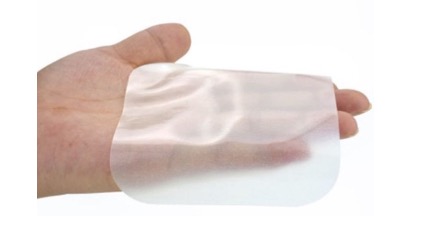
In home care, first assess the amount of wound exudate. For small amounts of exudate, choose a thin hydrocolloid or silicone foam dressing, which can be left on for two to three days. For moderate exudate, choose an absorbent foam dressing and change it every one to two days. For large amounts of exudate, use an alginate dressing to pack or cover the wound, with an outer layer of foam dressing, and change it daily. Each time you change the dressing, observe whether the wound base is red, whether the exudate is clear, and whether the surrounding skin is white. If the surrounding skin is macerated and white, it means the dressing's water-locking ability is insufficient or it was changed too late, and you need to switch to a dressing with stronger absorbency and shorten the dressing interval. If the wound is dry and there is no exudate, it means the dressing was too strong, and you need to switch to a hydrogel or thin hydrocolloid. The idea that a well-ventilated wound heals faster may not cause major problems for superficial, dry abrasions, but for wounds that require careful healing, dryness and scab formation will slow down repair and mask infection. A moist environment combined with appropriate dressings and a consistent dressing change schedule is key to faster and safer wound closure. For more information on Innomed® Hydrogel Dressing, refer to the Previous Articles. If you have customized needs, you are welcome to contact us; You Wholeheartedly. At longterm medical, we transform this data by Innovating and Developing Products that Make Life easier for those who need loving care.
Editor: kiki Jia


