
 English
 عربى
عربى Español
 русский
 中文简体
中文简体





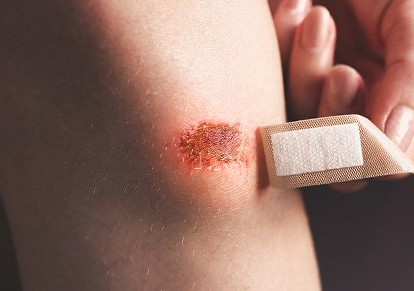
In daily life, a dark scab forms after bumps and scrapes, a common phenomenon during the healing process. Many people are curious about this scab, even itching to pick at it, and struggle with whether or not to peel it off prematurely. The slight itching and the eagerness to see the new skin underneath often make it irresistible to scratch it off. However, this seemingly simple action can have a profound impact on the final healing outcome of the wound.
What exactly is a scab?
A scab is essentially a natural biological dressing formed from dried fibrin, platelets, blood cells, and exudate. When the skin breaks and bleeds, the body initiates a clotting mechanism. These components intertwine on the wound surface, eventually coagulating and dehydrating to form a hard, protective shell. Its core function is as a physical barrier: first, to prevent bacteria and contaminants from the external environment from directly invading the unhealed subcutaneous tissue; and second, to provide a relatively stable and moist microenvironment for the ongoing repair work beneath, such as the migration and proliferation of new cells. Therefore, the scab is an important transitional structure in the body's self-repair process.
Why can't you just peel off the scab?
The most direct risk of tearing off scabs is that it disrupts the body's natural protective barrier. Forcibly removing a scab is equivalent to re-exposing the delicate, newly growing epidermis or granulation tissue underneath. This not only increases the risk of secondary infection but, more importantly, interrupts the continuous healing process. The act of tearing often causes mechanical damage, ripping off newly connected cells, leading to rebleeding and the formation of new wounds. This repeated damage significantly prolongs the overall healing time. Furthermore, violently tearing off scabs is more likely to damage the dermis, greatly increasing the probability of permanent pigmentation or atrophic scars. The itching sensation itself is a signal of healing progress, indicating the growth of nerve endings; tearing does not truly solve the problem.
How to properly treat scabs ?
The correct treatment principle can be summarized in eight words: keep it clean and let it fall off naturally. After the scab forms, keep it dry and clean daily. If there is dirt on the surrounding skin, you can carefully wash it with mild soap and water, then gently pat it dry with a clean, soft towel, avoiding friction. Do not deliberately cover it with gauze or soak it in ointment, as keeping it dry helps it stay in place. Short-term contact with water during bathing is fine, but be sure to gently pat it dry afterwards. The most important thing is to have enough patience and wait for it to fall off naturally. This time varies depending on the size and depth of the wound and individual constitution, and usually takes one to three weeks. When the new skin underneath has completely healed, the scab will naturally loosen from the edges and eventually fall off completely. This process is usually painless.
In what situations is it necessary to intervene with scabs ?
While the principle is to let it fall off naturally, appropriate intervention is necessary in certain situations. If obvious signs of infection appear beneath the scab, such as increased pain, pus draining from the edges upon pressure, increased redness and swelling around the skin, or even fever, it indicates that the scab may be a breeding ground for bacteria, hindering pus drainage. In this case, self-treatment is not recommended; a medical professional should assess the wound. They may perform professional debridement, such as carefully cutting or removing part of the scab under sterile conditions to drain the pus, and applying an anti-infective dressing. In another situation, for larger wounds, an overly thick and hard scab may act like armor, restricting the contraction of the skin edges and the spread of epithelial cells, thus delaying healing. This assessment also requires a professional, who may use hydrogel dressings for gentle, autolytic debridement to soften the scab and promote its gradual separation.
How to deal with itching during the scab healing process ?
Itching is very common in the later stages of healing, mainly due to the growth of new nerve endings and the release of chemicals such as histamine. Scratching should be absolutely avoided, as it can easily cause the scab to be accidentally torn off. You can try gently pressing around the itchy area with clean fingers, or applying a cold compress for a few moments, which can temporarily reduce nerve sensitivity. Keeping the skin moisturized also helps; apply a moisturizer to the healthy skin around the scab to reduce discomfort caused by dryness. If the itching is unbearable, consult a doctor or pharmacist for over-the-counter antihistamines.
When faced with a healing scab, resisting the urge to tear it off is the best support for the healing process. It's a manifestation of the body's wisdom, a temporary but crucial protective tent. Most of the time, all we need to do is provide a clean environment and plenty of patience, waiting for it to naturally dissipate after fulfilling its purpose. Forced intervention will only hinder progress and may even be counterproductive. If you have any concerns about the condition of the scab, or if signs of infection appear, seeking medical help promptly is the wise choice.
For more information on Innomed®Silver Ion Dressing Foam, Refer to the Previous Articles. If you have customized needs, you are welcome to contact us; You Wholeheartedly. At longterm medical, we transform this data by Innovating and Developing Products that Make Life easier for those who need loving care.
Editor: kiki Jia


